
That Frustrating Moment When Your Garage Door Won't Stay Closed
You press the button on your remote, the garage door starts its descent, and then — just inches from the ground — it reverses and goes right back up. You try again. Same thing. Maybe you try holding the wall button, and it still won't cooperate.
This is one of the most common garage door problems we see here in Boulder City, and it's especially frustrating because the door seems like it's working fine otherwise. The good news is that the cause is usually identifiable and fixable. The bad news is that ignoring it can lead to bigger, more expensive problems down the road.
Let's walk through the most common reasons your garage door reverses before reaching the floor and what you can do about each one.
1. Misaligned or Dirty Safety Sensors
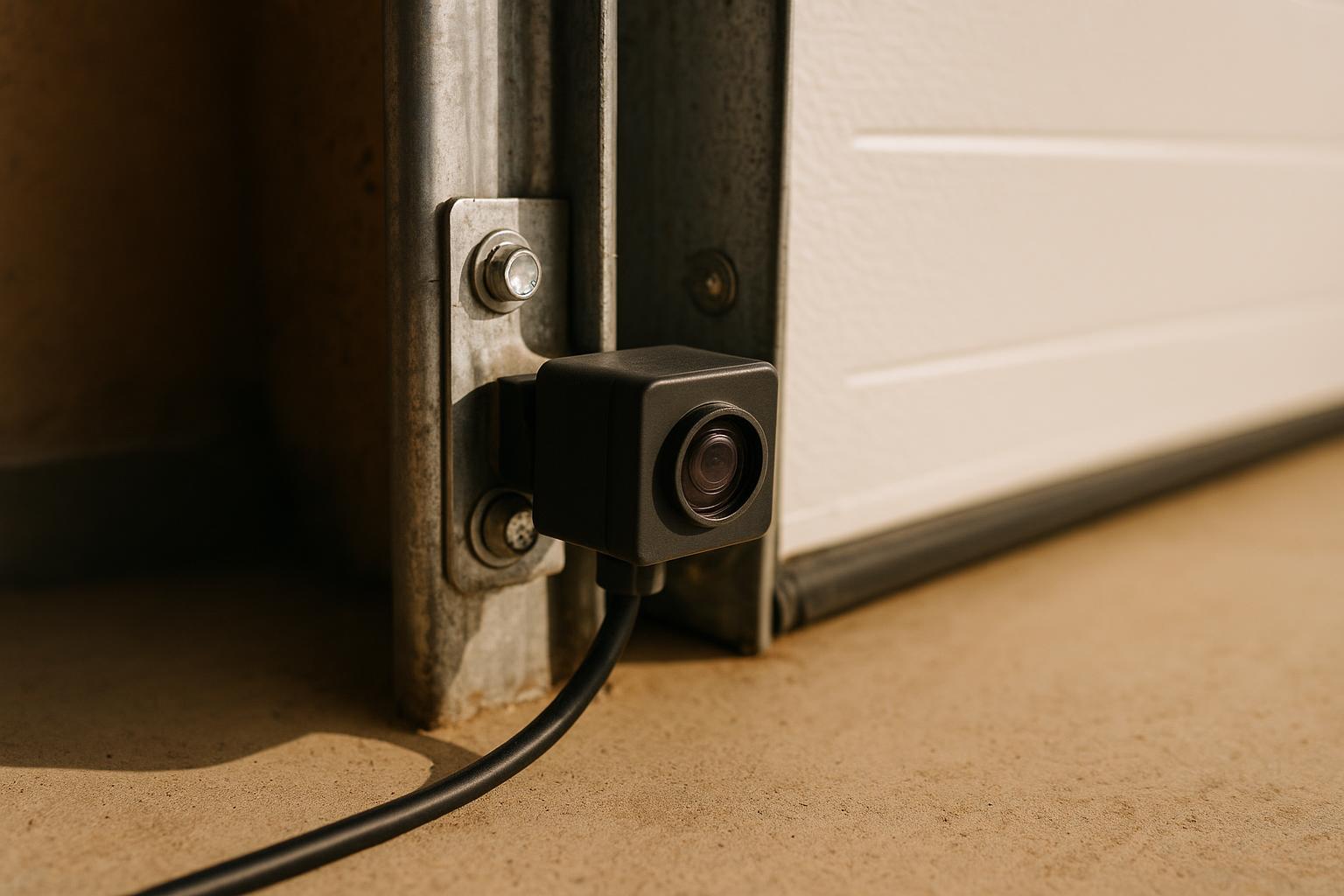
This is the number one cause of a garage door that reverses prematurely. Every modern garage door opener manufactured after 1993 is required to have photo-eye safety sensors mounted near the bottom of the door tracks, about six inches off the ground. These sensors send an invisible beam across the opening. If something breaks that beam — a bike, a trash can, a child — the door reverses to prevent injury or damage.
The problem is that these sensors can become misaligned from a bump, vibration, or even settling of your garage structure over time. They can also get coated in dust, cobwebs, or grime — something that happens frequently in the desert climate around Boulder City where dust storms and dry conditions are a fact of life.
What You Can Do
- Check that both sensors have a steady light (usually green). A blinking light typically means misalignment.
- Gently wipe the sensor lenses with a soft, dry cloth.
- Make sure nothing is blocking the path between the two sensors.
- Check that the sensors are pointing directly at each other. You can loosen the mounting bracket slightly and adjust the angle until the light holds steady.
If cleaning and adjusting doesn't solve the issue, the sensors or their wiring may need to be replaced — a quick job for a professional technician.
2. Incorrect Close-Limit Settings
Your garage door opener has limit settings that tell it how far the door should travel before it's considered fully open or fully closed. If the close-limit setting is off, the opener may think the door has hit an obstruction when it's actually just reaching the floor. The opener's built-in safety feature then kicks in and reverses the door.
What You Can Do
- Consult your opener's manual to locate the limit adjustment screws — they're usually on the back or side of the motor unit.
- Make small adjustments (a quarter turn at a time) to the close-limit screw and test the door after each adjustment.
- If you're not comfortable making these adjustments yourself, our team at Boulder City Garage Door can calibrate your opener quickly during a service call.
3. Worn or Broken Springs
Garage door springs do the heavy lifting — literally. They counterbalance the weight of the door so the opener doesn't have to work as hard. When springs wear out or lose tension, the door becomes heavier than the opener expects. The opener senses this extra resistance and interprets it as an obstruction, triggering the auto-reverse.
Springs are under extreme tension and can be dangerous to handle. This is one repair we strongly recommend leaving to professionals. In the Henderson and Boulder City area, we regularly replace both torsion and extension springs, and we always recommend replacing springs in pairs even if only one has failed. This ensures balanced operation and prevents a repeat failure shortly after the first repair.
4. Track Problems
The metal tracks that guide your garage door up and down need to be properly aligned, clean, and free of dents or obstructions. A bent track, a buildup of debris, or rollers that have jumped out of the track can all create enough resistance to trigger the opener's safety reverse.
Signs of Track Issues
- The door moves unevenly or appears crooked as it travels.
- You hear scraping, grinding, or popping sounds during operation.
- Visible gaps between the rollers and the track.
- Dents or bends in the track itself.
Minor debris can be cleaned out with a cloth, but bent tracks and misalignment should be handled by a technician to avoid further damage to the door or opener.
5. Opener Force Settings Need Adjustment
In addition to limit settings, most garage door openers have force settings that control how much power the motor uses to open and close the door. If the downward force is set too low, the opener won't push hard enough to fully close the door and will reverse instead.
This is another adjustment you can make yourself by following your opener's manual, but it requires a careful touch. Setting the force too high can create a safety hazard — the door should still reverse when it encounters a real obstruction. If you're unsure, it's worth having a professional dial it in correctly.
6. Weather and Temperature Effects
Living in the Mojave Desert means dealing with temperature extremes. Summer temperatures in Boulder City regularly exceed 110°F, and even winter nights can dip near freezing. These temperature swings cause metal components to expand and contract, which can throw off track alignment, change spring tension, and affect the lubrication on moving parts.
Regular maintenance — ideally twice a year — helps account for these seasonal shifts. A maintenance visit typically includes lubricating moving parts, checking spring tension, tightening hardware, inspecting tracks, and testing the safety features of your opener.
When to Call a Professional
Some of these fixes are simple enough for a handy homeowner to tackle. Cleaning sensors, clearing track debris, and making small limit adjustments are all reasonable DIY tasks. But there are situations where professional help is the safer and smarter choice:
- Broken or worn springs — always call a pro due to the high tension involved.
- Damaged tracks — improper repair can make the problem worse.
- Electrical or wiring issues with sensors or the opener.
- The door still reverses after you've tried the basic troubleshooting steps above.
At Boulder City Garage Door, we serve homeowners and businesses throughout Boulder City, Henderson, Las Vegas, and surrounding communities. We show up on time, diagnose the problem accurately, and fix it right the first time — no upselling, no runaround.
Don't Let a Reversing Door Compromise Your Security
A garage door that won't close isn't just annoying — it's a security risk. An open garage is an invitation for theft, pests, and exposure to the elements. If your door is reversing and you can't figure out why, give us a call. We'll get it sorted out so you can close your garage with confidence again.